


Responsible Gambling Tools for Canadian Online Casino Play
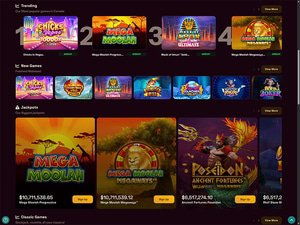
Responsible gambling is easier to manage when practical controls are available before play begins. For adults comparing casino grizzlys quest with other licensed online casinos Canada players may encounter, the important question is not simply what games or promotions appear, but how clearly an account supports limits, reminders and time away. The tools described for this service include deposit limits, session reminders, self-assessment information and self-exclusion. Their usefulness depends on setting them early, understanding their scope and checking the applicable provincial terms.
Start with a limit that reflects your budget
A deposit limit is one of the most direct controls available to an online gambling account. The reported account tools include daily, weekly and monthly settings, allowing a player to decide in advance how much money may be added during a chosen period. This is different from deciding while viewing a game, because the boundary is established before temptation or excitement can influence the decision.
Choose an amount that represents discretionary spending rather than rent, food, debt payments, savings or other essential commitments. It can help to review ordinary expenses first and then set a limit below the maximum amount that feels affordable. A limit should not be treated as a target to spend. If the account permits a lower amount to be selected, a conservative setting generally gives the control more practical value.
Players should also check how a change operates. A reduction may take effect immediately, while an increase could involve a waiting period or additional confirmation; the available source material does not establish the exact timing for every account. Read the displayed terms before saving the setting. Keep personal records of deposits as well, since an account limit may not include gambling elsewhere.
Use session reminders to interrupt automatic play
Time can pass unnoticed during continuous online play, particularly when games load quickly and rounds follow one another. Session reminders are designed to interrupt that pattern by showing how long a player has been active. Rather than relying on memory, a reminder creates a deliberate point at which to stop, review spending and decide whether continuing still fits the original plan.
Before opening a game, choose a short session length and decide what will happen when the reminder appears. A useful rule might be to stand up, leave the screen and take a ten-minute break. During that pause, check the account balance and ask whether the activity remains entertainment or has become an attempt to recover losses. Do not extend a session simply because an earlier result was disappointing.
Reminders work best alongside a separate time limit, such as a phone alarm or calendar entry. Account settings may vary, and the available information does not confirm every interval or notification format. If a reminder is easy to dismiss, treat it as a warning rather than proof that play is controlled. Repeatedly ignoring it is a sign that stronger restrictions may be appropriate.
Take a self-assessment before behaviour escalates
Self-assessment information can help a player notice patterns that are difficult to recognise during ordinary play. Relevant questions may include whether gambling is taking more time or money than intended, whether losses are being chased, or whether play is being hidden from family members. One answer does not diagnose a problem, but several concerning answers deserve attention.
Complete an assessment when calm, not immediately after a win or loss. Consider the last several weeks rather than one unusually good or bad session. Look at transaction records, time spent online and the effect on sleep, work, relationships and household finances. This broader review can reveal gradual changes that a player may overlook when focusing only on individual games.
A self-assessment is a prompt for action, not a guarantee that gambling is safe. If the results raise concerns, reduce or stop play and seek independent support. The Responsible Gambling Council’s information resources can provide general educational context for Canadian readers, but they do not determine the specific controls or terms of any casino account. Urgent financial or mental-health concerns should be discussed with an appropriately qualified local service.
Choose self-exclusion when limits are not enough
Self-exclusion is a stronger option for someone who wants to stop gambling rather than manage a spending allowance. The available information indicates that requests for exclusion may be made through support, while some account controls can be found in the banking or account area. The precise process, duration and whether the restriction covers related brands must be confirmed in the current responsible-gambling terms.
Before requesting exclusion, withdraw or document any balance and resolve practical account questions if possible. Do not delay the request while waiting for a bonus, a pending outcome or a hoped-for win. Promotional eligibility should never be a reason to continue gambling. Keep a copy of the request and note when it was submitted, particularly if support confirmation is required.
Self-exclusion is most effective when supported by changes outside the account. Remove saved payment details, block promotional notifications where possible and use device-level blocking tools. Tell a trusted person so that someone else understands the decision. If gambling occurs across several operators, excluding from only one account may leave an important gap; consider equivalent restrictions everywhere that play takes place.
Check the limits of account controls
Responsible-gambling settings are useful, but they do not replace personal planning or professional help. A deposit limit may control money added to one account without accounting for cash, another operator or credit already available elsewhere. A session reminder may be dismissed, and a self-assessment may be answered inaccurately. Understanding these limitations prevents false confidence.
Account access can also be affected by identity checks, geographical restrictions, self-exclusion and security reviews. The source material does not establish that every tool works identically for every province or account configuration. Players should read the current responsible-gambling, account and local eligibility terms, then ask support to explain any uncertainty before relying on a control.
Review settings periodically, especially after a change in income, housing costs, health or family circumstances. Never increase a limit to chase losses or cover an overdue bill. If gambling is causing distress, secrecy, arguments or financial difficulty, stopping is more important than optimizing account settings. A trusted person, debt adviser or health professional can help create a broader plan than any casino interface can provide.
Questions Canadian players often ask
Can a deposit limit prevent all gambling spending?
No. It normally applies to deposits within the relevant account and period, not necessarily to other operators, cash or alternative payment sources. Treat it as one barrier among several. Track total gambling spending separately and use broader restrictions or support if one account limit does not provide enough protection.
Is self-exclusion the same as taking a short break?

Not necessarily. A short break may be a personal pause, while self-exclusion is a formal restriction placed on an account for a stated period or under stated conditions. Confirm the duration, reactivation rules and coverage directly with support. Do not assume exclusion automatically applies to other services or brands.
What should someone do after ignoring their limits?
Stop play rather than attempting to win back the amount, record what happened and remove immediate access to payment methods. Lower or suspend account access, tell someone you trust and seek independent gambling or financial support. Repeatedly bypassing controls is a reason to consider self-exclusion and professional help.
